
Ever placed a bet, watched the game unfold, and then found yourself scratching your head at the final result? Especially in the dynamic world of Asian Handicap betting, outcomes aren’t always a straightforward win or loss. Sometimes, you encounter something called a ‘push.’ For both new and seasoned punters, understanding the ‘push rule’ is absolutely critical, and platforms like Singbet apply it consistently. This isn’t just a minor detail; it’s a cornerstone of managing your bankroll and making informed betting decisions. Let’s pull back the curtain and demystify the Singbet push rule in Asian Handicap betting, ensuring you’re always one step ahead!
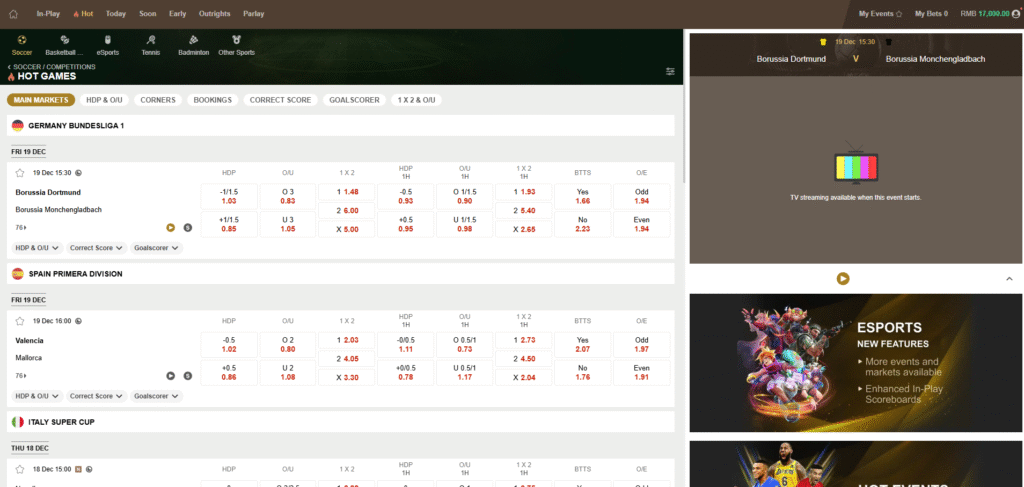
What Exactly is Asian Handicap Betting?
Before we delve into the ‘push rule,’ it’s essential to have a solid grasp of Asian Handicap betting itself. Originating from Asia (hence the name!), this betting market was designed to eliminate the possibility of a draw in matches and to provide more balanced odds, especially in games where one team is heavily favored over another. Instead of simply betting on Win, Lose, or Draw (1X2), teams are given a ‘handicap’ – a virtual head start or deficit in goals (or points, depending on the sport) – before the match even begins.
Think of it this way: a stronger team might start with a -1.5 goal handicap, meaning they need to win by at least two clear goals for your bet on them to succeed. Conversely, an underdog might get a +1.5 goal handicap, meaning they can lose by one goal, draw, or win, and your bet still comes in. This system creates more competitive odds and offers savvy bettors a way to find value that might not exist in traditional markets.
Asian Handicaps come in various forms:
- Whole Goal Handicaps: e.g., -1, +2, 0
- Half Goal Handicaps: e.g., -0.5, +1.5
- Quarter Goal Handicaps: e.g., -0.25, +0.75
It’s these different types that dictate how the ‘push rule’ comes into play.
Unpacking the ‘Push Rule’: When Your Stake Returns
The ‘push rule’ is specifically applicable when you bet on a whole number Asian Handicap. So, what exactly is a ‘push’? In simple terms, a push occurs when, after applying the handicap, the outcome of the match results in a tie. When a push happens, your entire stake for that particular bet is returned to you. It’s neither a win nor a loss – it’s like the bet never happened, and your money is back in your account, ready for your next wager.
This rule is a standard industry practice, and you’ll find it consistently applied across reputable betting platforms, including Singbet.
Let’s illustrate with some clear examples:
Imagine a football match between Team A and Team B.
Example 1: Betting on a Negative Whole Handicap
- You bet on Team A with a -1 Asian Handicap.
- This means Team A needs to win by more than one goal for your bet to win. If they win by exactly one goal, it’s a push.
- Scenario A: Team A wins 2-0. Applying the handicap (-1), the adjusted score is 1-0 to Team A. Your bet wins!
- Scenario B: Team A wins 1-0. Applying the handicap (-1), the adjusted score is 0-0. This is a push! Your stake is returned.
- Scenario C: The match is a draw (e.g., 0-0) or Team A loses. Your bet loses.
Example 2: Betting on a Positive Whole Handicap
- You bet on Team B with a +2 Asian Handicap.
- This means Team B can lose by one goal, draw, or win, and your bet wins. If they lose by exactly two goals, it’s a push.
- Scenario A: Team A wins 1-0. Applying the handicap (+2), the adjusted score is 1-2 to Team B. Your bet wins!
- Scenario B: Team A wins 2-0. Applying the handicap (+2), the adjusted score is 2-2. This is a push! Your stake is returned.
- Scenario C: Team A wins 3-0 (or by more than two goals). Your bet loses.
Understanding these scenarios is vital. A push isn’t a bad outcome; it simply means you didn’t win, but you also didn’t lose your capital. It’s a risk mitigation feature inherent to whole number handicaps.
The Nuances: Why Half and Quarter Goal Handicaps Don’t Push
This is where the distinction between handicap types becomes crucial. While whole number handicaps can result in a push, half-goal and quarter-goal handicaps are designed to ensure there’s always a decisive outcome – a full win, a full loss, a half win, or a half loss – never a push.
Half Goal Handicaps (e.g., -0.5, +1.5):
- These handicaps always ensure a winner or a loser because you can’t score half a goal in football. For example, if you bet on Team A -0.5, they either win (your bet wins) or they draw/lose (your bet loses). There’s no way for the adjusted score to be a tie.
Quarter Goal Handicaps (e.g., -0.25, +0.75):
- These are a bit more sophisticated as they split your stake between two handicap lines. For instance, a -0.25 handicap is effectively half your stake on 0 and half on -0.5.
- If one of these ‘split’ bets results in a push: Only that half of your stake is returned. The other half will either win or lose.
- Example: You bet on Team A -0.25. Your stake is split: 50% on Team A 0, 50% on Team A -0.5.
- If Team A wins by 1 goal: The ‘Team A 0’ part is a win. The ‘Team A -0.5’ part is a win. Total win.
- If the match is a draw: The ‘Team A 0’ part is a push (stake returned). The ‘Team A -0.5’ part is a loss. You get half your stake back.
This highlights the unique characteristic of whole number handicaps: they are the only ones that offer the ‘safety net’ of a push when the outcome lands exactly on the handicap line. Understanding this difference is paramount for strategic betting.
Why Understanding the ‘Push Rule’ Matters for Your Betting Strategy
Knowing about the Singbet push rule (and the industry-standard push rule) isn’t just about avoiding confusion; it’s about smart betting and safeguarding your bankroll.
- Financial Protection: A push means you don’t lose your capital. While it’s not a win, it’s certainly better than a loss, allowing you to re-invest that money into future opportunities. It’s a built-in safety mechanism for certain bet types.
- Informed Decision-Making: When choosing between a -1 handicap and a -1.5 handicap, the push rule becomes a crucial factor. If you believe a team will win but only by a single goal, a -1 handicap offers the potential for a push (stake returned) rather than an outright loss with a -1.5 handicap. This choice can significantly impact your long-term profitability.
- Risk Management: The ability to get your stake back allows for more nuanced risk management. In tight matches where the outcome is hard to predict beyond a certain margin, a whole number handicap can be a strategic choice to minimize potential losses.
- Building Confidence: When you fully grasp the potential outcomes of your bets, you bet with greater confidence. No more post-match confusion, just clear understanding of why a bet settled the way it did.
Singbet and the Industry Standard: Consistency You Can Trust
It’s important to stress that the ‘push rule’ for whole number Asian Handicaps is an industry standard, not a unique quirk of Singbet. Reputable bookmakers globally, including Singbet, adhere to these widely accepted rules. When you see a +1 or -2 handicap on Singbet, you can be confident that if the adjusted score results in a tie, your stake will be returned.
However, as a best practice, always familiarize yourself with the specific terms and conditions of any betting platform you use. While the push rule for whole handicaps is universal, minor variations in how other complex bets are settled can exist. Singbet, known for its extensive Asian Handicap offerings and clear rules, is a platform where you can confidently apply this knowledge.
Maximizing Your Asian Handicap Strategy with the Push Rule in Mind
Now that you’re an expert on the push rule, how can you integrate this knowledge into a winning Asian Handicap strategy?
- Analyze the Match Dynamics: Before placing a whole number handicap bet (e.g., -1, +2), consider how likely a team is to win by exactly that margin. Is it a conservative team known for narrow victories? Or an underdog that typically keeps games close?
- Weigh Value vs. Risk: Sometimes, a -1.5 handicap might offer slightly better odds than a -1. But if you suspect a narrow win, the -1 provides the ‘push’ safeguard, which could be more valuable than marginally higher odds that turn into a full loss.
- Review Historical Data: Look at how teams perform against handicaps. Do they often scrape through wins? Or do they tend to dominate comprehensively? This historical context can inform your handicap choice.
- Don’t Fear the Push: A push isn’t a failure; it’s a strategic non-loss. Embrace it as part of managing your variance and protecting your bankroll.
- Bankroll Management: Always bet responsibly. Understanding the push rule helps you gauge potential outcomes, but sound bankroll management is the ultimate key to sustainable betting.
Conclusion: Master the Push, Master Asian Handicap Betting
Understanding the Singbet push rule in Asian Handicap betting is far more than just knowing a technicality; it’s about gaining a significant advantage in your betting journey. It demystifies outcomes, protects your capital on whole number handicaps, and empowers you to make smarter, more strategic decisions. By recognizing when a push can occur and how it differs from half and quarter goal handicaps, you unlock a deeper level of insight into this popular betting market.
Armed with this knowledge, you’re not just placing bets; you’re making calculated investments. So, go forth, analyze those handicaps, and bet with confidence! What are your thoughts on the push rule? Have you ever had a crucial push save your stake? Share your experiences below!
If you found this guide helpful, please give it a like, drop a comment, or share it with fellow bettors. Your engagement helps us create more valuable content!